
Is “Job Hugging” So Wrong?
In the early 2020s, we had the "Great Resignation." Then came "Quiet Quitting." But as we navigate the complexities of 2026, a new behavior has taken hold of the workforce: Job Hugging.
January 16, 2026

Coined by firms like Korn Ferry, "job hugging" describes the defensive crouch many employees have adopted in response to a volatile market. It is the collective decision to stay put, hold tight, and value security above all else. After the whirlwind of AI displacement and economic shifts over the last year, the question isn’t just why people are staying, it’s whether staying is actually serving them.
Why Are We Holding On So Tight?
If you find yourself clinging to a role you no longer love, you aren't alone. This phenomenon is being driven by four distinct pressures:
The AI "Evolution" Gap - There is a pervasive fear of becoming obsolete. Many feel that if they leave their current "safe" harbor, they’ll be forced to compete in a market where the pace of AI evolution outruns their current skillset.
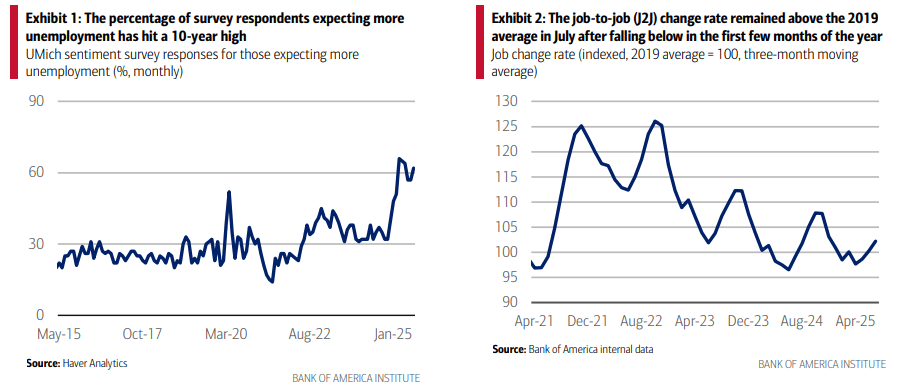
The Death of the "Hopping" Premium - The days of 20% salary bumps for switching companies are largely behind us. As the labor market has tightened, the financial incentive to take a risk has vanished, making "the devil you know" feel like the smarter bet.
Ambiguity Aversion - Human beings are hardwired to prefer a known risk over an unknown one. In a world of high uncertainty, your current job, even with its flaws, provides a sense of control that a new opportunity cannot guarantee.
The Sunk Cost Trap - It’s hard to walk away when you’ve spent years building internal capital. Many "job huggers" stay because they feel they are "due" for a promotion or a vestment, fearing that leaving now would mean all that previous effort was for nothing.
WHAT DOES THIS MEAN FOR YOU?
If you realized while reading this that you’ve been "hugging" your role, take a breath. It doesn't mean you’ve lost your ambition or your edge. In a 2026 market defined by rapid shifts, caution is often a valid survival strategy.
The real danger isn't staying, it’s stagnating. To ensure your safety hasn't become a cage, ask yourself: Is this role still growing me, or is it just holding me?
To navigate this, consider these three strategic pivots:
Audit Your "AI Currency" - Growth in 2026 isn't just about moving up the ladder; it’s about moving forward with technology. Are you building skills that remain relevant as AI evolves? If your current role doesn’t offer a sandbox to experiment with new tools, your "safe" job might actually be making you more vulnerable in the long run.
Build "Invisible" Optionality - You don’t have to quit to be prepared. Are you maintaining a network outside your company? Are you building a personal brand that exists independently of your current employer? Stability is most powerful when it’s backed by a "Plan B."
Find Growth in Place - Sometimes the best move is a lateral one. Before looking at the exit, look at the architecture of your current company. Is there a new project, a different department, or a shift in scope that would provide the growth you crave without the risk of a total market leap?
THE BOTTOM LINE? Staying in a role should be a choice, not a default. In 2026, "job hugging" is only a mistake if you’re doing it with your eyes closed. If you choose to stay, do so with the intention of outgrowing your current self—even if you aren't outgrowing your current desk.
Written by: Lavanya Jindal, Community Volunteer
Is “Job Hugging” So Wrong?
In the early 2020s, we had the "Great Resignation." Then came "Quiet Quitting." But as we navigate the complexities of 2026, a new behavior has taken hold of the workforce: Job Hugging.
January 16, 2026
Coined by firms like Korn Ferry, "job hugging" describes the defensive crouch many employees have adopted in response to a volatile market. It is the collective decision to stay put, hold tight, and value security above all else. After the whirlwind of AI displacement and economic shifts over the last year, the question isn’t just why people are staying, it’s whether staying is actually serving them.
Why Are We Holding On So Tight?
If you find yourself clinging to a role you no longer love, you aren't alone. This phenomenon is being driven by four distinct pressures:
The AI "Evolution" Gap - There is a pervasive fear of becoming obsolete. Many feel that if they leave their current "safe" harbor, they’ll be forced to compete in a market where the pace of AI evolution outruns their current skillset.
The Death of the "Hopping" Premium - The days of 20% salary bumps for switching companies are largely behind us. As the labor market has tightened, the financial incentive to take a risk has vanished, making "the devil you know" feel like the smarter bet.
Ambiguity Aversion - Human beings are hardwired to prefer a known risk over an unknown one. In a world of high uncertainty, your current job, even with its flaws, provides a sense of control that a new opportunity cannot guarantee.
The Sunk Cost Trap - It’s hard to walk away when you’ve spent years building internal capital. Many "job huggers" stay because they feel they are "due" for a promotion or a vestment, fearing that leaving now would mean all that previous effort was for nothing.
WHAT DOES THIS MEAN FOR YOU?
If you realized while reading this that you’ve been "hugging" your role, take a breath. It doesn't mean you’ve lost your ambition or your edge. In a 2026 market defined by rapid shifts, caution is often a valid survival strategy.
The real danger isn't staying, it’s stagnating. To ensure your safety hasn't become a cage, ask yourself: Is this role still growing me, or is it just holding me?
To navigate this, consider these three strategic pivots:
Audit Your "AI Currency" - Growth in 2026 isn't just about moving up the ladder; it’s about moving forward with technology. Are you building skills that remain relevant as AI evolves? If your current role doesn’t offer a sandbox to experiment with new tools, your "safe" job might actually be making you more vulnerable in the long run.
Build "Invisible" Optionality - You don’t have to quit to be prepared. Are you maintaining a network outside your company? Are you building a personal brand that exists independently of your current employer? Stability is most powerful when it’s backed by a "Plan B."
Find Growth in Place - Sometimes the best move is a lateral one. Before looking at the exit, look at the architecture of your current company. Is there a new project, a different department, or a shift in scope that would provide the growth you crave without the risk of a total market leap?
THE BOTTOM LINE? Staying in a role should be a choice, not a default. In 2026, "job hugging" is only a mistake if you’re doing it with your eyes closed. If you choose to stay, do so with the intention of outgrowing your current self—even if you aren't outgrowing your current desk.
Written by: Lavanya Jindal, Community Volunteer
Coined by firms like Korn Ferry, "job hugging" describes the defensive crouch many employees have adopted in response to a volatile market. It is the collective decision to stay put, hold tight, and value security above all else. After the whirlwind of AI displacement and economic shifts over the last year, the question isn’t just why people are staying, it’s whether staying is actually serving them.
Why Are We Holding On So Tight?
If you find yourself clinging to a role you no longer love, you aren't alone. This phenomenon is being driven by four distinct pressures:
The AI "Evolution" Gap - There is a pervasive fear of becoming obsolete. Many feel that if they leave their current "safe" harbor, they’ll be forced to compete in a market where the pace of AI evolution outruns their current skillset.
The Death of the "Hopping" Premium - The days of 20% salary bumps for switching companies are largely behind us. As the labor market has tightened, the financial incentive to take a risk has vanished, making "the devil you know" feel like the smarter bet.
Ambiguity Aversion - Human beings are hardwired to prefer a known risk over an unknown one. In a world of high uncertainty, your current job, even with its flaws, provides a sense of control that a new opportunity cannot guarantee.
The Sunk Cost Trap - It’s hard to walk away when you’ve spent years building internal capital. Many "job huggers" stay because they feel they are "due" for a promotion or a vestment, fearing that leaving now would mean all that previous effort was for nothing.
WHAT DOES THIS MEAN FOR YOU?
If you realized while reading this that you’ve been "hugging" your role, take a breath. It doesn't mean you’ve lost your ambition or your edge. In a 2026 market defined by rapid shifts, caution is often a valid survival strategy.
The real danger isn't staying, it’s stagnating. To ensure your safety hasn't become a cage, ask yourself: Is this role still growing me, or is it just holding me?
To navigate this, consider these three strategic pivots:
Audit Your "AI Currency" - Growth in 2026 isn't just about moving up the ladder; it’s about moving forward with technology. Are you building skills that remain relevant as AI evolves? If your current role doesn’t offer a sandbox to experiment with new tools, your "safe" job might actually be making you more vulnerable in the long run.
Build "Invisible" Optionality - You don’t have to quit to be prepared. Are you maintaining a network outside your company? Are you building a personal brand that exists independently of your current employer? Stability is most powerful when it’s backed by a "Plan B."
Find Growth in Place - Sometimes the best move is a lateral one. Before looking at the exit, look at the architecture of your current company. Is there a new project, a different department, or a shift in scope that would provide the growth you crave without the risk of a total market leap?
THE BOTTOM LINE? Staying in a role should be a choice, not a default. In 2026, "job hugging" is only a mistake if you’re doing it with your eyes closed. If you choose to stay, do so with the intention of outgrowing your current self—even if you aren't outgrowing your current desk.
Written by: Lavanya Jindal, Community Volunteer

